![Allgo_Logo_PNG.png]](https://kb.allgogroup.com/hs-fs/hubfs/Allgo_Logo_PNG.png?height=40&name=Allgo_Logo_PNG.png)
Occasionally, prepaid cards issued by AllGo can go into a negative balance. This article explains:
-
What a negative balance is
-
Why it can happen
-
How our credit card processor EML handles it
-
What actions we take internally to recover the funds
What is a Negative Balance?
Our cards are prepaid cards, meaning they are intended to only spend funds that have already been loaded onto them. However, in some situations a transaction can still go through even when the card balance is €0.00.
When this happens, the card balance becomes negative (for example: -€12.50). This means the cardholder has successfully made a purchase even though there were no funds available on the card at the time.
Why Do Negative Balances Happen?
Negative balances usually occur because some merchants process transactions without real-time internet authorisation (offline transactions). Because the merchant is not checking the card balance in real time, the purchase may still be processed even if the card has no available funds.
Examples include:
-
In-flight purchases on airplanes (most common)
-
Timing delays in authorisation/settlements
-
Transactions where the merchant temporarily has no network connectivity
How We Currently Receive Negative Balance Reports
EML provide us with a monthly report listing all cards that have gone into a negative balance. For most cases, EML automatically attempts to recover the funds through the card network by opening a chargeback case. However, we are seeing some limitations, leaving some negative balances unrecovered:
-
Chargeback cases are usually only opened for amounts greater than €15.
-
In-flight transactions seem to be generally excluded from the chargeback escalation process.
Because of these limitations, some negative balances remain unrecovered.
Our Approach to Recovering Negative Balances
To improve how we manage these cases, we are introducing the following process.
1. Processor Recovery Attempt
The credit card processor will continue to attempt recovery through the card network where possible. This typically applies to balances above €15, excluding in-flight transactions.
2a. Internal Review of Higher Balances and Recurring Transactions
For any negative balance greater than €50 where the processor has not successfully recovered the funds, we will escalate the case internally.
2b. Contacting the Client (Employer)
In these situations, Finance will open a corporate ticket. Customer service will reach out to the client company that issued the card and request for them to contact the employee to stop using the card. We will then request reimbursement for the outstanding amount via an invoice. Under a new policy in the programme terms, the client is responsible for negative balances generated by cards issued under their programme. The client can then manage recovery from the employee if required through their own internal processes.
Example Case - March 2026
One cardholder (based in Romania) has a negative balance of -€163.88 on one card and -€171.36 on another:
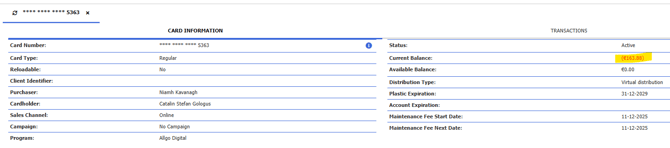
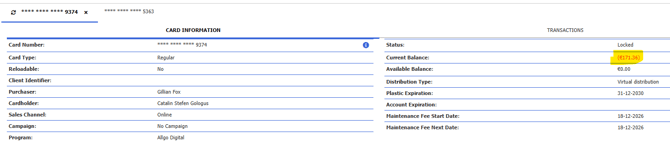
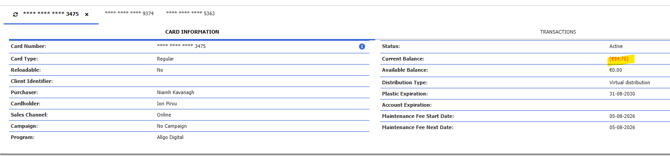
They have another MTM colleague (based in Italy), also doing the same:
When we looked into it, we could see continuous transactions on Ryanair flights:
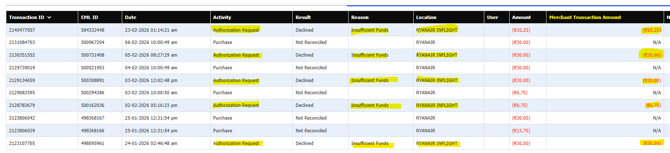
The next step would be to contact their employer (our client - MTM Engineering) and request that they ask the employee to stop attempting to make these transactions. We would then bill the client for the negative amounts, which they can re-coup from their employee (sample email below).
Customer Support Team Training
To support this process, we will be providing training for the Customer Support team covering:
-
What negative balances are
-
Why they occur
-
How to explain them to clients
-
The escalation process for balances above €50
-
How to respond to common client questions
Key Takeaways
-
Negative balances can occur due to offline transactions where the card balance cannot be checked in real time.
-
Our processor attempts recovery for many cases, usually for amounts above €15.
-
In-flight transactions cannot usually be recovered through chargebacks (we aren't seeing that pattern).
-
For unrecovered balances above €50, we will contact the client to request reimbursement.
-
Customer Support will receive training on how to handle these cases.
Sample email:
Hi [Client Name],
We have identified a repeated negative balance on a card issued under your programme by employee [employee name] .
The card ending [last 4 digits] currently has an outstanding negative balance of €[amount]. As previously noted, negative balances can occur when merchants process transactions without real-time authorisation (for example, in-flight purchases).
Because this has occurred on multiple occasions, we would ask that the outstanding amount be reimbursed. We may also need to review the continued use of this card if similar transactions continue to occur.
Please let us know if you would like further details about the transaction.
Kind regards,